_01抠图-scaled.png)
-03-1-300x133.jpg)
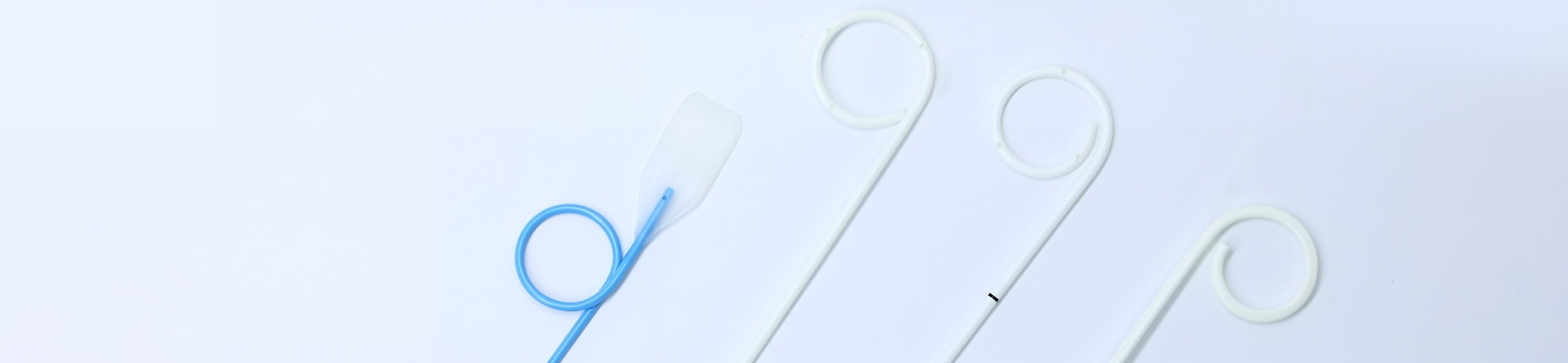
The Double-J stent (JJ stent) gets its nickname from its characteristic curled ends, which look just like a pig’s tail. While it may be a small, flexible tube, it is a “master weapon” in urology for protecting kidney function and ensuring a smooth post-operative recovery.
💡 Why Do You Need This “Small Tube”?
Think of the ureter as a narrow water pipe connecting the kidney (the reservoir) to the bladder (the drain). The stent’s primary mission is to keep the ureter open and ensure smooth drainage.
- Post-Stone Surgery: Prevents “traffic jams” caused by stone fragments and helps small stones pass smoothly.
- Relieving Obstructions: Quickly bypasses blockages caused by tumors or strictures to protect the kidneys.
- Surgical Support: Acts as a “scaffolding” during the healing of ureteral injuries or to help surgeons identify the ureter during complex procedures.
- Modern Insight: Stenting is no longer “one-size-fits-all.” According to international guidelines (like the AUA), surgeons may skip the stent in simple, uncomplicated cases to avoid unnecessary discomfort.
🌡️ What Does It Feel Like Inside?
As a “foreign object,” the stent may cause some temporary “protests” from your body. These are common and usually not a cause for alarm:
- Hematuria (Blood in Urine): Often occurs after activity as the stent rubs against the bladder lining.
- Aches and Pains: You may feel a dull ache in your side, especially during or after urination.
- Frequency and Urgency: The stent can tickle the bladder like a “small brush,” making you feel like you always need to go.
- Warning Signs (Seek Medical Attention): If you experience fever, chills, severe back pain, or a sudden decrease in urine output, contact your doctor immediately.
💊 Proactive Symptom Management
The old advice was to “just bear it,” but modern urology advocates for active medication management. Discuss these options with your doctor:
- $\alpha$-blockers (e.g., Tamsulosin) to relax the ureter.
- Anticholinergics or $\beta_3$-agonists to reduce bladder spasms.
- Combining these medications often yields better results than using a single drug.
🛡️ Living with Your “J-Friend”
To make your recovery period (usually 2 weeks to 3 months) easier, remember these rules:
- The Golden Rule: Drink 2,000–3,000 ml of water daily to flush the system and lower infection risks.
- Avoid Strenuous Activity: No heavy lifting, deep squats, or jumping, which can cause the stent to migrate.
- Never Hold Your Urine: Empty your bladder as soon as you feel the urge to prevent urine from refluxing back to the kidney.
⚠️ The Most Important Thing: Don’t Forget Removal!
A JJ stent is a temporary bridge, never a permanent fixture.
- The Risk: Leaving a stent too long can lead to “encrustation” (stone buildup), breakage, or permanent kidney damage.
- Prevention: Mark the removal date on your calendar and set a phone alarm. Some patients may use a Stent-on-String, which can be easily removed at home under a doctor’s guidance.
* This article is for educational purposes and is not a substitute for professional medical advice. Always consult your surgeon for specific treatment plans.